

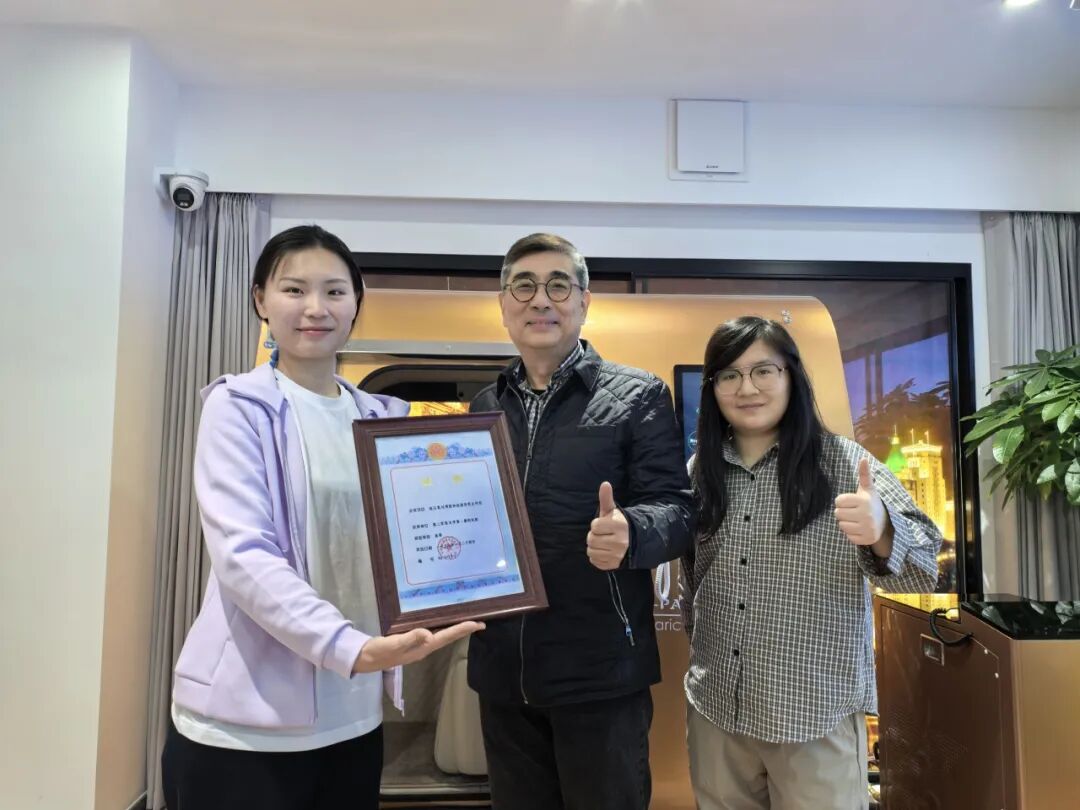
Recently, Professor Wang Qiugen, Chief Expert of the Trauma Center at Shanghai First People’s Hospital and a renowned domestic authority in the field of peripheral nerve injury and repair, was invited to visit MACY-PAN for an in-depth inspection and academic exchange at the R&D base of its flagship home use hyperbaric oxygen chambers.
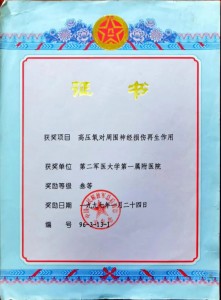
As a key contributor to the 1997 research project “The Effect of Hyperbaric Oxygen on Peripheral Nerve Regeneration” (which won the Third Prize of Military Science and Technology Progress), Professor Wang was deeply impressed during the visit. Drawing on more than two decades of fundamental research, he highly praised MACY-PAN’s breakthrough achievements in the civilianization, intelligentization, and lifestyle integration of hyperbaric oxygen technology. This visit is regarded as an “academic resonance” spanning a quarter of a century, marking the formation of a theoretical closed loop in which hyperbaric oxygen technology extends from serious medical treatment to daily health management.
1. A 26-Year “Academic Resonance”: From Basic Research to Technological Implementation
During the symposium, Professor Wang revisited the research results published by his team in 1997 in the <Journal of the Second Military Medical University> and other core journals. At that time, through extensive animal experiments, the team demonstrated that hyperbaric oxygen therapy could significantly promote axonal regeneration of peripheral nerves (such as the sciatic nerve) after injury, effectively reduce the degree of Wallerian degeneration of nerve fibers, and exert clear biological effects on the recovery of nerve function.“
“At that time, the HBOT chamber was large and expensive, and only applicable in top-tier hospitals,” Professor Wang noted during the visit. “I had always been thinking about how to make this therapy - which can ‘promote cellular regeneration and improve microcirculation’ - benefit more early-stage or chronic patients. Today, at MACY-PAN, I see the answer.” He pointed out that MACY-PAN has reconstructed hyperbaric oxygen technology, originally used for critical care, into compact and home-use forms, representing a major leap in engineering.
2. Technical Evaluation: Breaking the ‘Medical’ Boundary and Reshaping Home Oxygen Therapy Standards
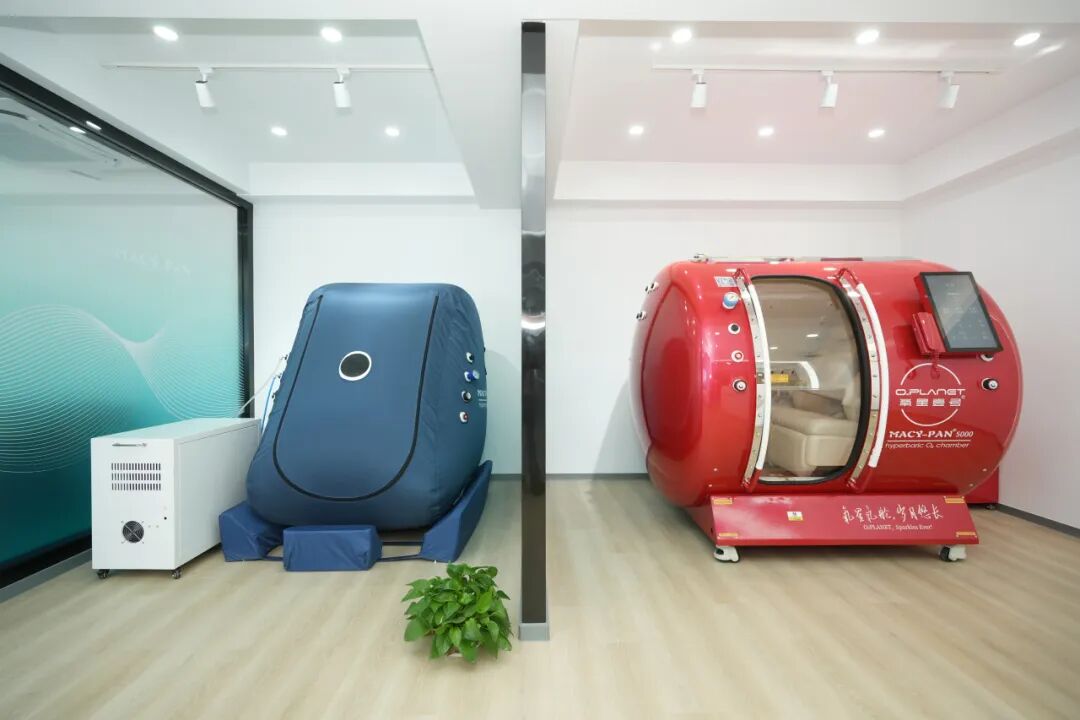
While visiting the production lines of the latest generation of MACY-PAN hard chambers and portable soft chambers(https://www.hbotmacypan.com/portable-chamber/), Professor Wang conducted an in-depth analysis of MACY-PAN’s technical approach from the perspective of clinical pathophysiology:
1)High Alignment Between Microcirculation Improvement and Nerve Repair Mechanisms
Professor Wang emphasized that the key to recovery after nerve injury lies in the reconstruction of the microenvironment following “Wallerian degeneration”. By increasing chamber pressure (stably maintained at 1.3 ATA - 1.5 ATA), hyperbaric oxygen chambers significantly enhance the level of physically dissolved oxygen in plasma and tissues.
“This is not merely about alleviating ‘fatigue,’” Professor Wang stressed. “It effectively creates a ‘highway of oxygen’ for damaged neuronal axons, directly acting on the metabolism of Schwann cells. This aligns with the latest international findings on ‘hyperbaric oxygen promoting the release of exosomes from Schwann cells’.” He believes that this mechanism holds high application value for home-based rehabilitation in conditions such as diabetic peripheral neuropathy in middle-aged and elderly individuals, postoperative numbness following cervical or lumbar spine surgery, and sports injuries.
2)Civilianization as the Key to Achieving ‘Early Intervention’
“In clinical practice, treatment often begins only after significant functional impairment appears, by which time the optimal window has often been missed.” Professor Wang highly commended MACY-PAN’s exploration in the field of home hyperbaric chambers. He stated that MACY-PAN has transformed hyperbaric oxygen equipment from hospital-based “pressure chambers” into household “oxygen rooms.” This low-threshold, high-frequency usage model truly realizes the shift from treating existing diseases to preventive healthcare strategies.
3. In-Depth Focus: MACY-PAN’s Hardcore Strength and Industry-Academia-Research Integration
During the visit, Mr. Macy Pan, General Manager of MACY-PAN, presented the company’s technological strengths to Professor Wang. As one of the first national high-tech and specialized “little giant” enterprises to pioneer the home-use hyperbaric oxygen chamber market in China, MACY-PAN is far more than a simple equipment integrator.
Solid R&D Data Support:
Mr. Pan introduced that MACY-PAN holds over 60 core intellectual property rights, including invention patents and utility model patents. Its products are exported to more than 120 countries and regions worldwide and have passed rigorous ISO9001 and ISO13485 international quality management system certifications. Notably, in the development of the “HE5000” multi-person chamber series, MACY-PAN overcame challenges in pressure stabilization and noise reduction for large capacity hard shell chambers, achieving multi-scenario applications for both sitting and lying positions.
Validation from the International Market:
Professor Wang paid special attention to market feedback. Upon learning that MACY-PAN products had provided health support for the Chinese Olympic delegation during the Tokyo 2021 Olympics and the Beijing 2022 Winter Olympics, and had received over 5,000 consultations in a single day at the 2025 Shanghai Elderly Care Expo, he remarked:
“Market recognition is the best form of clinical validation. Athletes’ use reflects extremely high demands for ‘physical recovery and accelerated lactic acid clearance,’ while the preference among elderly populations validates its universal value in improving cerebral hypoxia and enhancing immunity.”
4. Looking Ahead: Exploring New “Oxygen-Based” Pathways for Neuro rehabilitation
At the conclusion of the visit, Professor Wang held a closed-door discussion with MACY-PAN’s R&D team. Both sides agreed that with the in-depth implementation of the “Healthy China 2030” strategy, physical adjunct therapies represented by civilian hyperbaric oxygen chambers are entering a golden era.
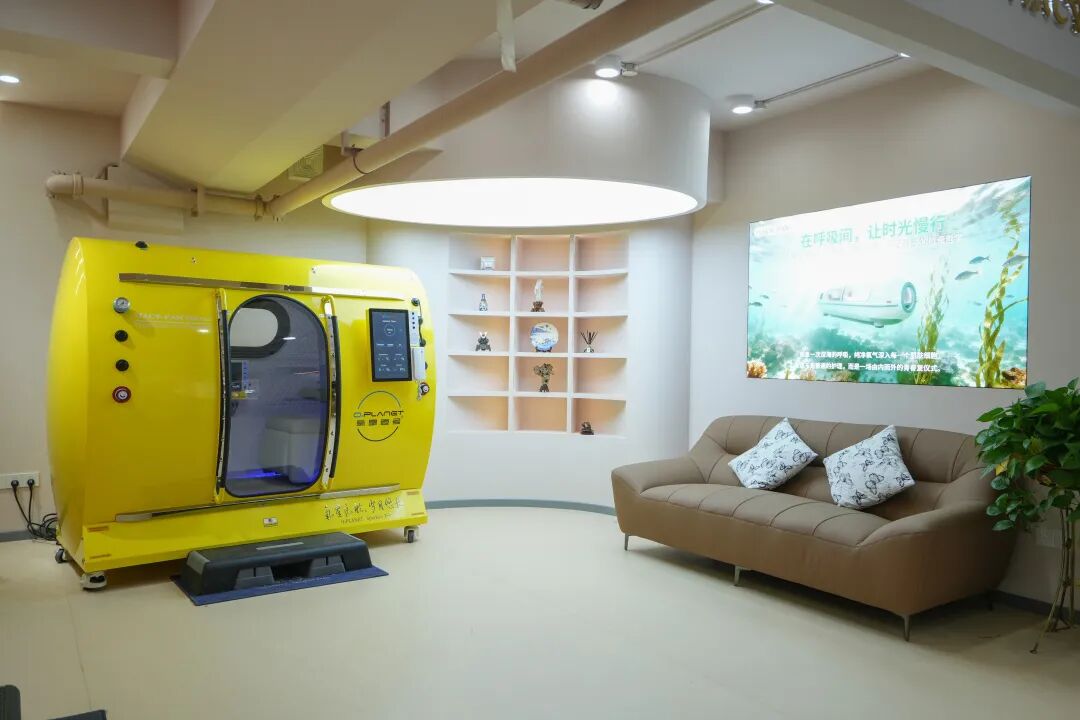
Professor Wang encouraged the MACY-PAN team: “Twenty-six years ago, I observed under a microscope how hyperbaric oxygen enabled severed nerves to ‘grow back.’ Today, in Songjiang, I see hyperbaric oxygen entering thousands of households. I hope MACY-PAN will continue to deepen clinical data collaboration, particularly in early intervention for Alzheimer’s disease, rehabilitation from sports injuries, and home-based adjunct therapy for post-stroke sequelae, providing more Chinese solutions.”
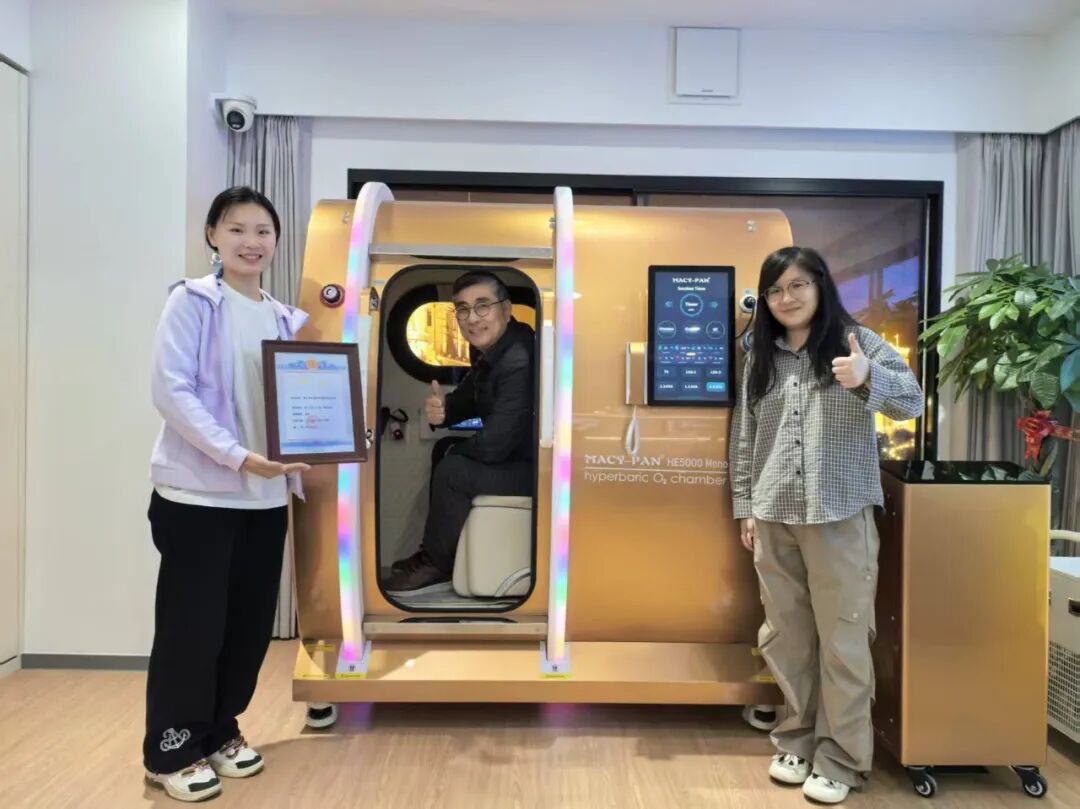
This visit not only represents recognition of the product strength of MACY-PAN, but also serves as a vivid example of collaboration between Chinese medical experts and domestic manufacturing enterprises to promote the civilianization and accessibility of advanced hyperbaric oxygen technology.
Post time: Apr-07-2026