

If you’re shopping for a soft hyperbaric chamber, the harder question is often not which brand, but where the thing will actually go.
A lying chamber is long and low. A sitting chamber is taller, sometimes shorter, and in some cases big enough for two people. Neither type is better overall. The right one depends on your room, on who will use it, and on what you want to do while you’re inside.
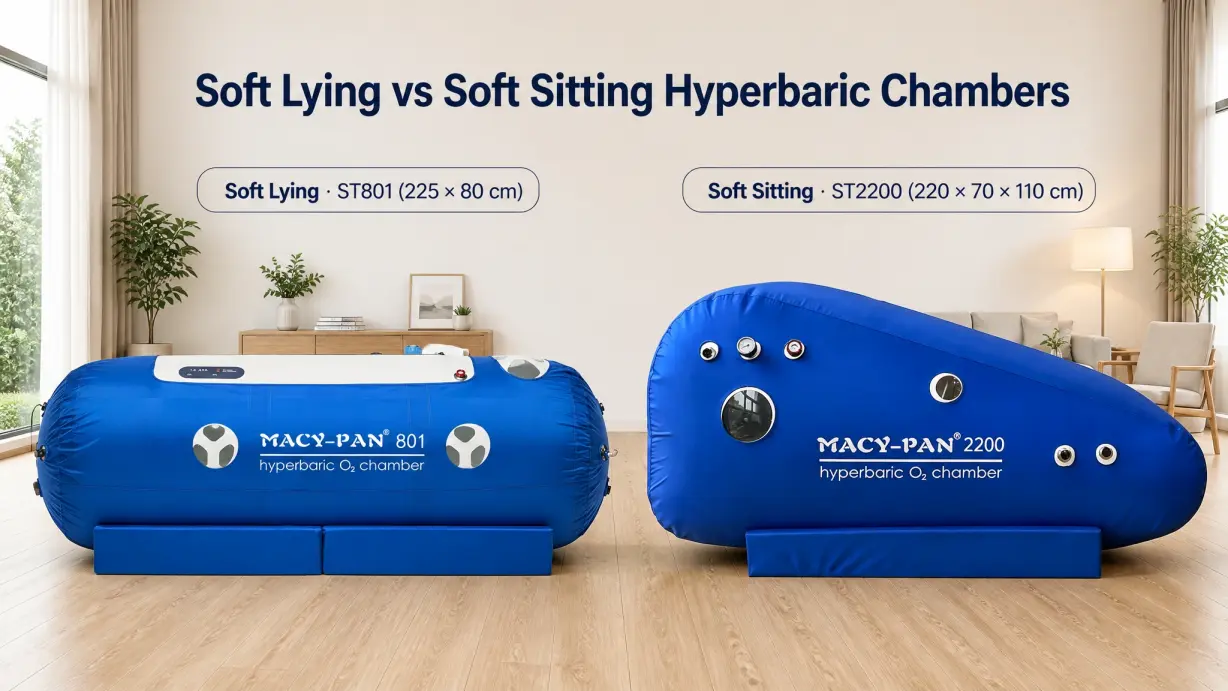
This guide puts our soft lying models (ST801 and ST901) next to our soft sitting models (ST2200, ST1700, L1 and MC4000), using the sizes on our product pages and in our 2026 catalog. Measure the room before you read the table. The numbers mean a lot more once you know what you’re working with.
The short answer
· Choose a lying chamber if you have a clear stretch of floor about 2.3 m (7.5 ft) long, only one person will use it, and you want to lie flat and rest.
· Choose a sitting chamber if you’d rather read, work or watch something upright, if lying flat for a long time is uncomfortable for you, or if two people want to use it together.
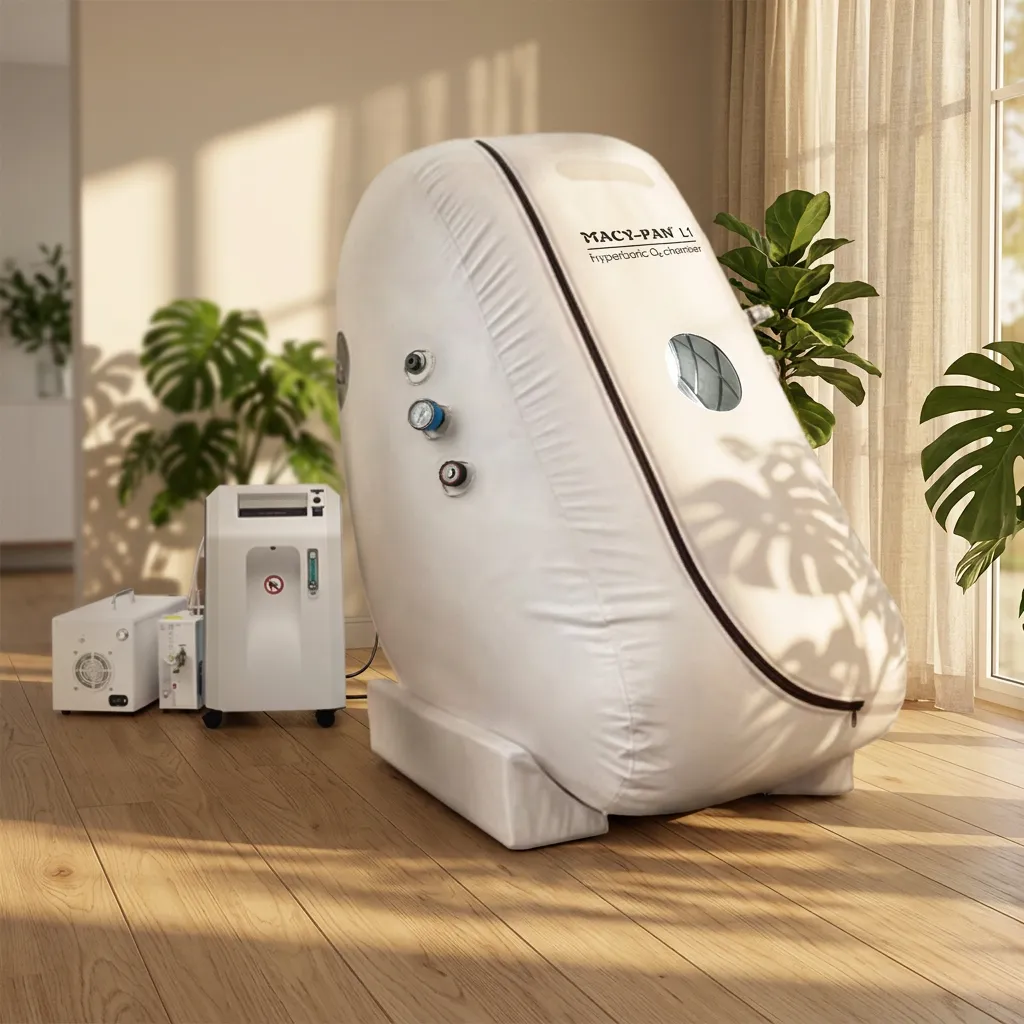
· Choose the L1 if floor length is the problem, for example in a narrow room or a corner.
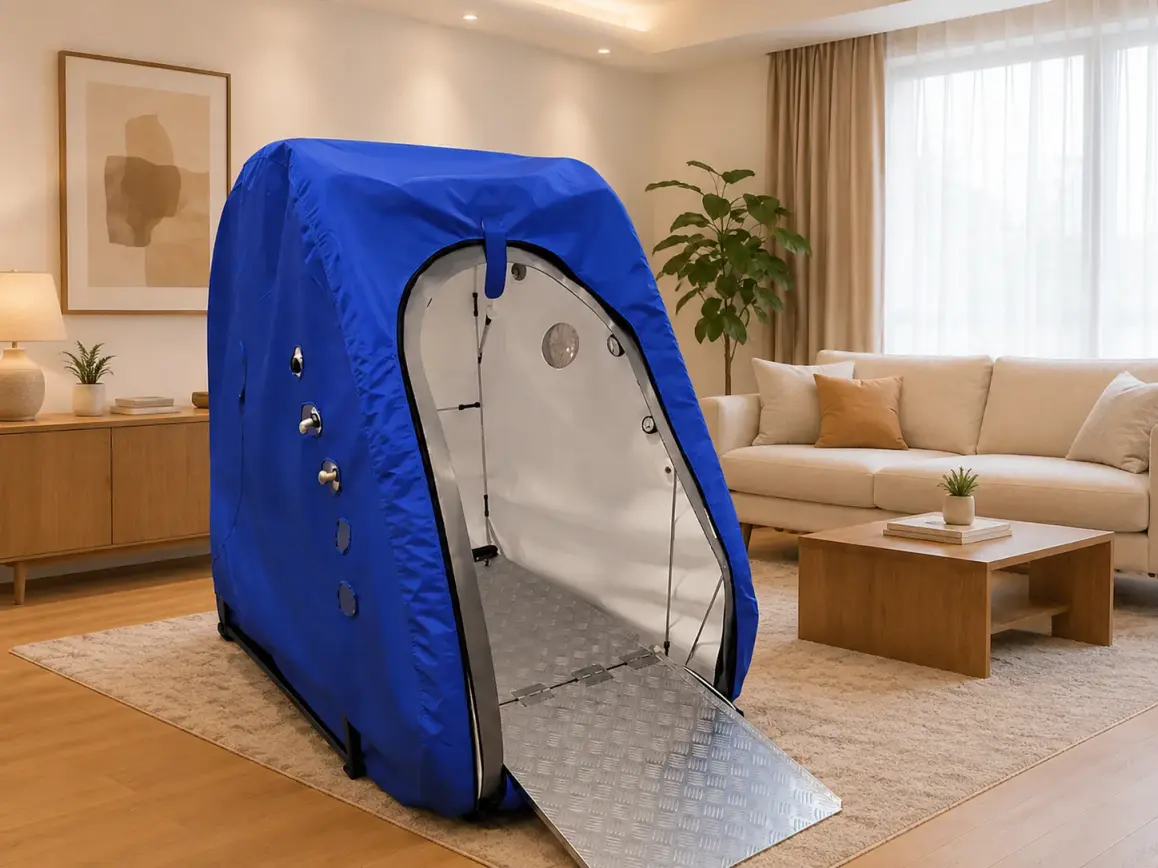
· Choose the MC4000 if the user can’t easily crouch or kneel to get in, or uses a wheelchair.
Sizes side by side
| Model | Type | Listed size | Approx. floor area | Height | Users |
| ST801 | Lying | 225 × 80 cm (89″ long, 32″ diameter) | 1.8 m² (19 sq ft) | 80 cm | 1 |
| ST901 | Lying | 89″ long, 36″ diameter (catalog) | about 2.1 m² (22 sq ft) | about 91 cm | 1 |
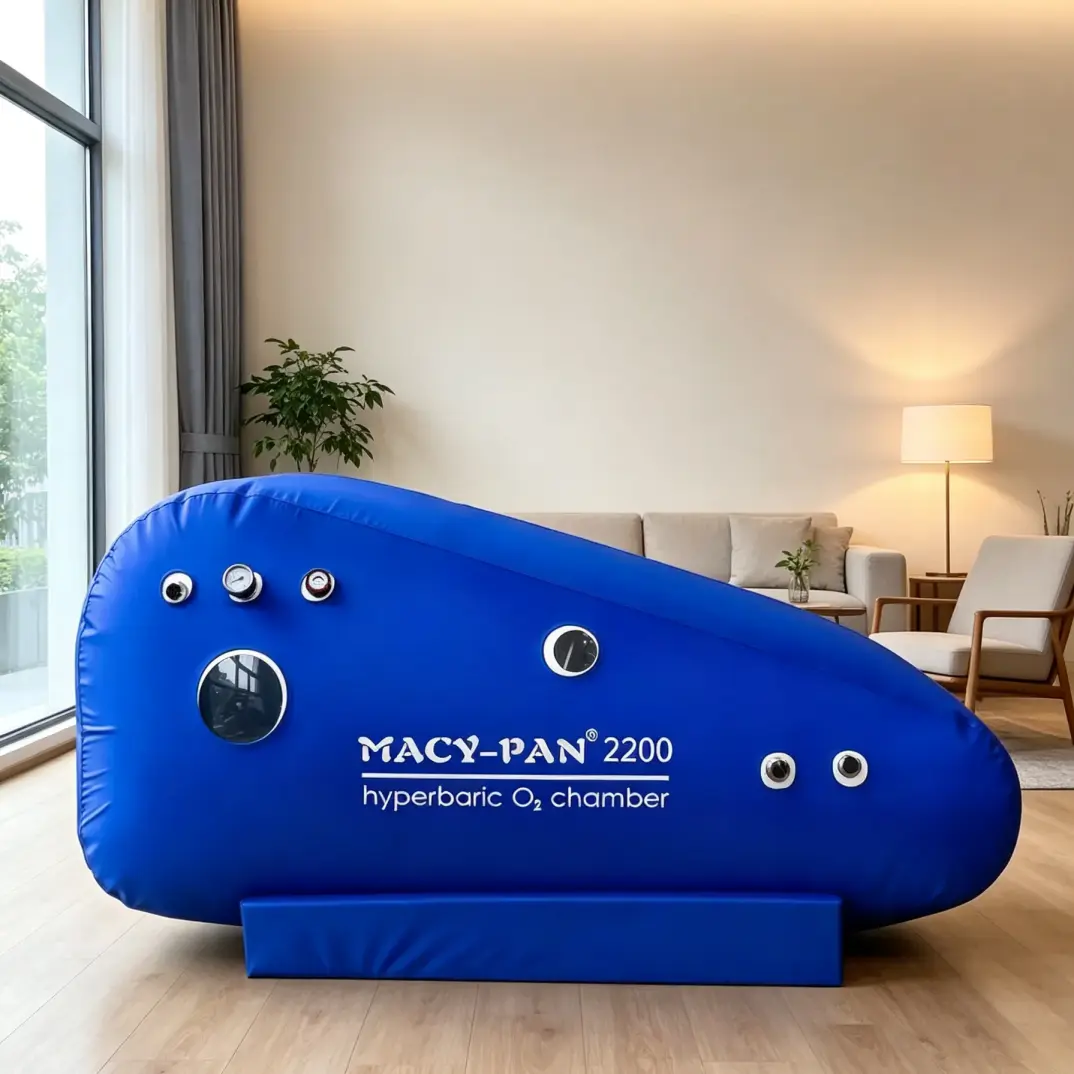
| ST2200 | Sitting | 220 × 70 × 110 cm (89″ × 28″ × 43″) | 1.5 m² (17 sq ft) | 110 cm | Up to 2 |
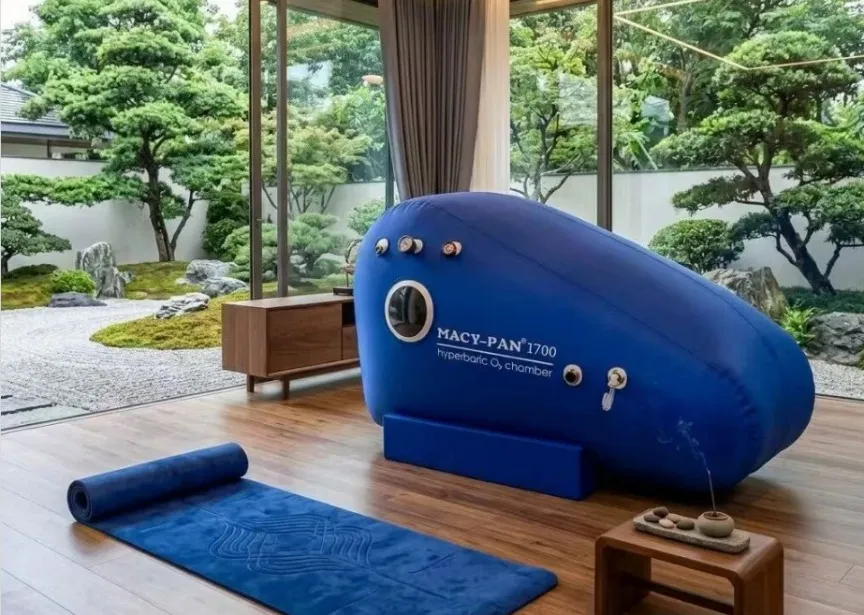
| ST1700 | Sitting | 170 × 70 × 110 cm (67″ × 28″ × 43″) | 1.2 m² (13 sq ft) | 110 cm | Ask us |
| L1 | Upright sitting | 140 × 100 × 160 cm (56″ × 40″ × 64″) | 1.4 m² (15 sq ft) | 160 cm | Ask us |
| MC4000 | Walk-in sitting | 143 × 132 × 178 cm (catalog) | 1.9 m² (20 sq ft) | 178 cm | Up to 2 |
Floor area covers the chamber only. Every soft chamber comes with three machines: an oxygen concentrator, an air compressor and an air cooler. They sit beside the chamber, connect to it by hoses and need their own spot near a power socket. Plan room for them too.
Two things in that table tend to surprise people.
First, the ST2200 isn’t much shorter than the lying ST801. They’re both about 2.2 m long. What you get with the ST2200 is a different posture and room for a second person, not a smaller footprint. If length is what’s limiting you, look at the ST1700 or the L1.
Second, the L1 is the shortest chamber here, but with the 100 cm width on its product page it covers slightly more floor than the ST1700. Its advantage is that it’s compact in every direction and builds height instead of length, so it fits where a long chamber won’t, such as a corner, an alcove or the end of a narrow room.
Lying chambers: what to expect
The ST801 is the model we sell most for home use. It’s a tube about 225 cm long with a mattress inside. You get in through the zippers along the side, lie down, and close up. The product page lists 7 clear windows, and you can bring music, a book, a phone or a laptop in with you.
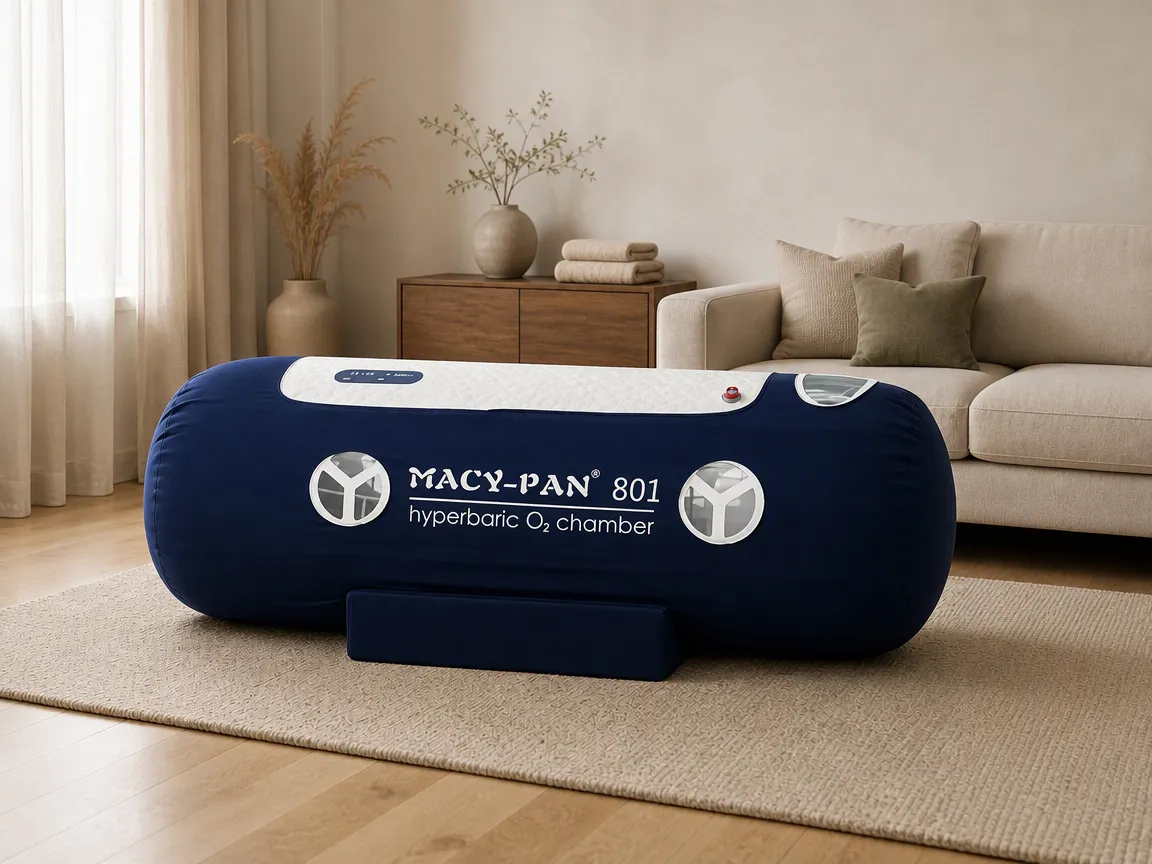
Space is the main consideration. Besides the 2.25 m length, you need room beside the zipper to kneel down and climb in. In practice that usually means the chamber goes along a wall, with the open side facing the room.
Getting in and out of a lying chamber means getting down to floor level and back up again. That’s easy for most people. If someone in your household has stiff knees or hips, though, it will be a small daily nuisance, and over a few months of regular use that adds up.
When the chamber is deflated, the internal metal frame keeps its shape, and the frame comes apart in sections when you move it. Our catalog lists the chamber body at 13 to 16 kg, depending on diameter, so moving it to another room is a one-person job.
A lying chamber suits a single user who wants to lie down and rest during sessions, and who has a spare room, a bedroom wall or a quiet corner of a studio long enough for it.
Sitting chambers: four different shapes
“Sitting chamber” covers several quite different designs, so here they are model by model.
ST2200. It looks like a lying chamber that’s been raised to 110 cm, with a folding chair inside. The seat reclines, and the entry is at the front and angled, so you sit down into it rather than crawl in. Compared with the ST801 it has 3 zippers instead of 2 and 4 windows instead of 7. It holds two people. If a couple or a parent and child want to do sessions together, this is the one to look at.
ST1700. The same height and width as the ST2200, but 50 cm shorter. It’s for one person who wants to sit up or semi-recline and needs a chamber that fits a smaller room or an office.
L1. An upright chamber 160 cm tall with an L-shaped zipper for getting in and out. Its product page calls it our most space-saving model and lists a fast pressurization speed.
MC4000. A walk-in chamber 178 cm tall. The catalog lists two versions: the U-type you walk into, and the N-type built for wheelchair access. It’s a two-seater. For anyone who can’t crouch, kneel or step over a low edge, it’s usually the only soft model that works.
Check your ceiling for the two upright models. 160 cm and 178 cm fit easily in a normal room, but in an attic with a sloped roof or under a staircase you’ll need to measure.
What stays the same
Choosing between lying and sitting is about space and posture. The chamber’s working specifications are much the same across the range:
· Pressure: 1.3 to 1.5 ATA across the range.
· Oxygen: a 5 or 10 L/min concentrator, delivered by mask, headset or nasal tube.
· Noise: the catalog lists 45 dB or less.
· Material: TPU with a nylon fibre layer, sealed with YKK zippers, with an emergency valve that lets you get out within 30 seconds.
So don’t let pressure or oxygen output decide this one. Choose by the room and the user.
How to measure your room before you order
Take ten minutes with a tape measure and write these down:
1. Floor length and width of the spot. Measure from wall to wall, then subtract anything in the way: skirting heaters, radiators, furniture you can’t move.
2. Access space. For a lying chamber, leave enough room beside the zipper to kneel. For a sitting chamber, leave room in front of the entry to step in and turn around.
3. A spot for the three machines. They need floor space close to the chamber and a power socket. Ask us for the hose lengths if your layout is tight.
4. Ceiling height, if you’re considering the L1 or MC4000, especially under a sloped roof.
5. Room air. The air cooler takes in room air and cools it by about 5 °C before it goes into the chamber. A small closed closet warms up during a session, so pick a room with normal ventilation.
Delivery is less of a worry than with a hard chamber. A soft chamber deflates, and its frame comes apart in sections.
Questions we get asked a lot
Can two people use a lying chamber?
No. The ST801 and ST901 are single-person chambers. For two people, look at the ST2200 or MC4000.
Does sitting change anything inside the chamber?
No. Pressure and oxygen settings are the same whether you sit or lie. What changes is how you spend the session and how much of your room the chamber takes up.
Can I move the chamber later?
Yes. Deflate it, take the frame apart and set it up again in the new spot.
Not sure which one fits?
Send us the length, width and ceiling height of the room, a photo if you can, and tell us who will be using the chamber. We’ll suggest a model and check that the machines will fit beside it. You can reach us through the message form on our website or on WhatsApp.
Post time: Nov-02-2026