

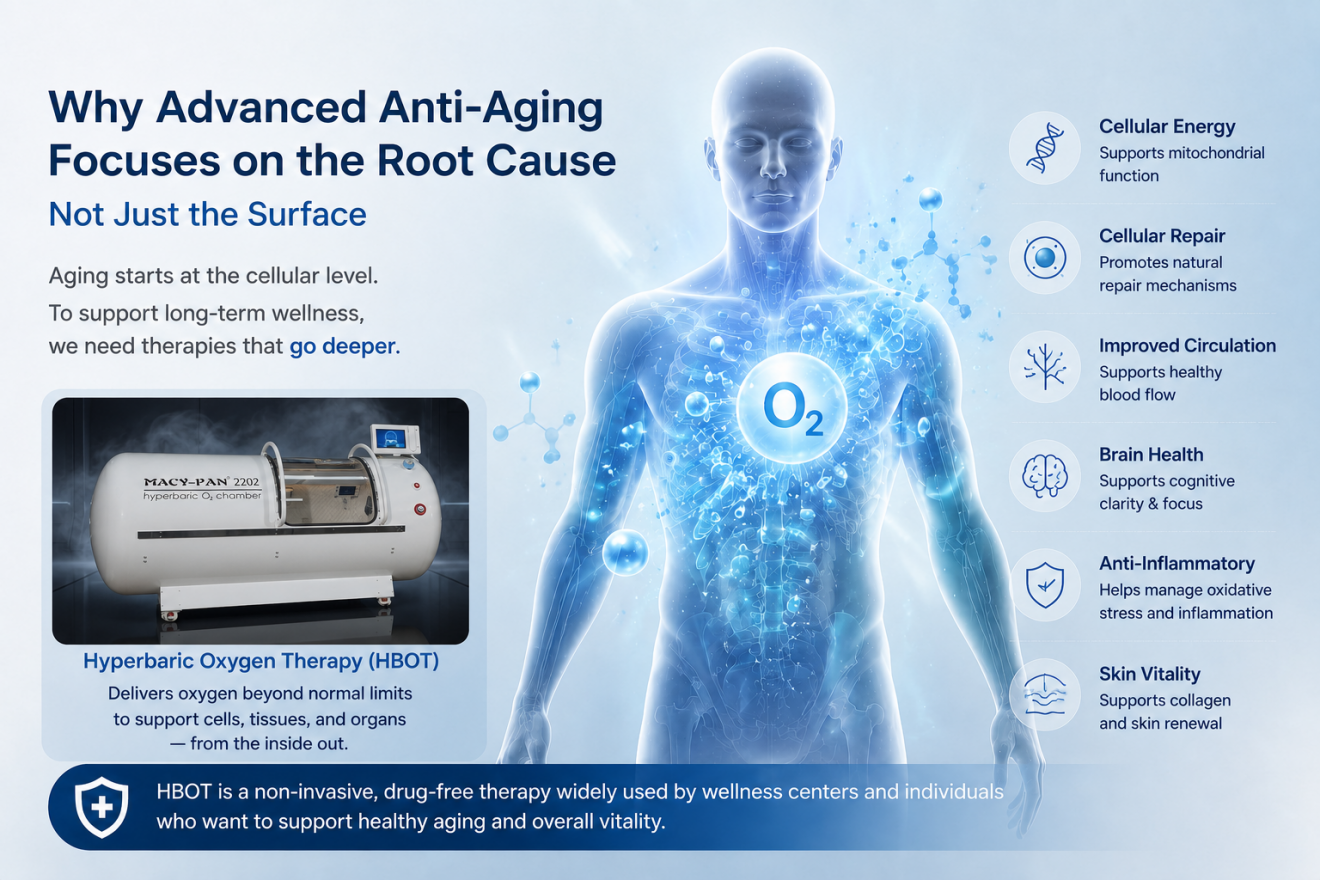
Aging is something everyone experiences, but the way we approach it has changed dramatically.
Many people spend thousands of dollars on skincare products, supplements, and aesthetic treatments, hoping to maintain a younger appearance and better energy levels. While these methods can provide visible improvements, aging continues to involve much deeper biological changes inside the body.
Today, researchers, wellness professionals, and longevity communities are paying more attention to approaches that focus on cellular health and overall function.
Among these emerging technologies, Hyperbaric Oxygen Therapy (HBOT) has become one of the most discussed non-invasive approaches in the field of healthy aging.
At the same time, advanced medical interventions such as regenerative therapies and injectable treatments continue to attract interest among those seeking more intensive anti-aging solutions.
The difference lies in the level of intervention.
Traditional anti-aging methods often focus on improving external signs of aging, while newer longevity approaches explore ways to support the body’s natural biological processes.
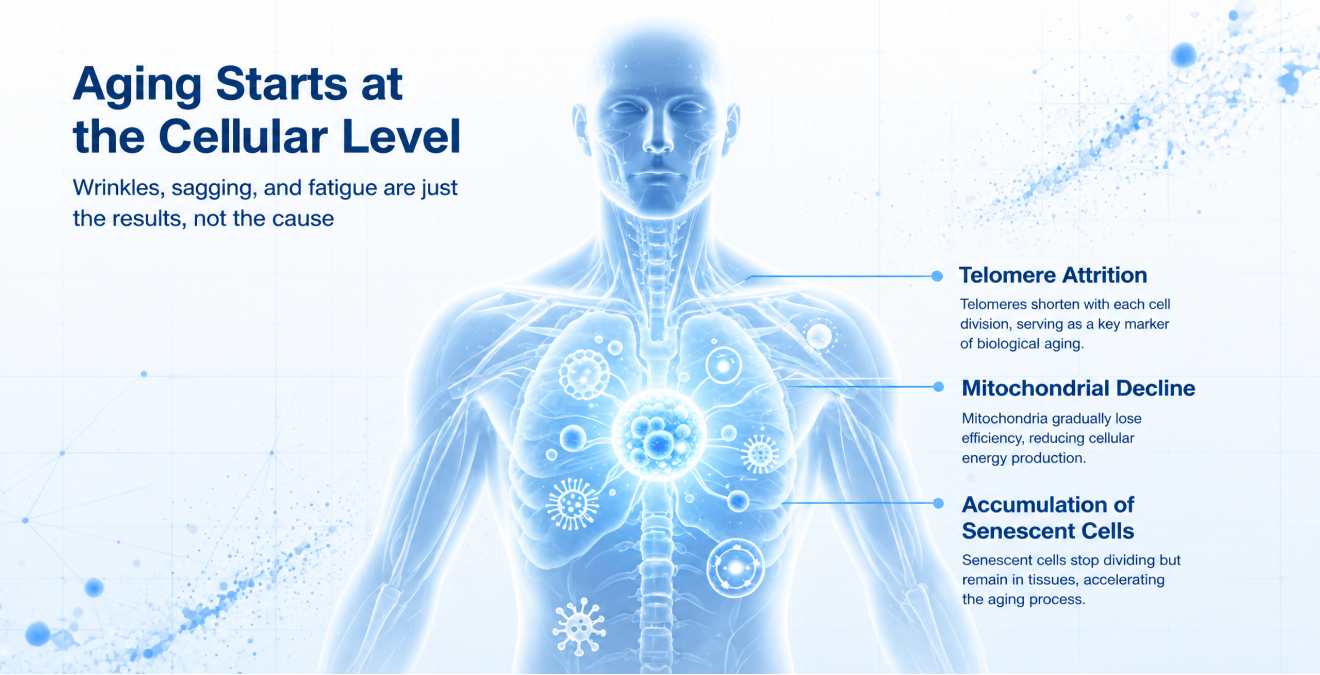
Wrinkles, reduced skin elasticity, tired appearance, and slower recovery are some of the most noticeable signs of aging. However, these visible changes are only part of a much larger biological process.
Modern aging research focuses on changes that occur inside cells and tissues.
In 2013, researchers introduced the widely recognized framework of the Hallmarks of Aging in the journal Cell. This framework describes several biological mechanisms associated with aging, including:
- Genomic instability
- Telomere shortening
- Epigenetic changes
- Loss of protein balance
- Mitochondrial dysfunction
- Accumulation of senescent cells
- Stem cell exhaustion
- Chronic inflammation
- Changes in cellular communication
These mechanisms influence how cells maintain energy, repair damage, and respond to stress over time.
This explains why many traditional anti-aging solutions have limitations.
Skincare products mainly work on the surface layers of the skin. Supplements must go through digestion and metabolism before reaching the bloodstream. Cosmetic procedures can improve appearance but usually focus on specific areas rather than overall biological health.
Maintaining a youthful appearance and supporting healthy aging are connected, but they are not exactly the same thing.
The human body has developed complex protective systems that control what substances can enter tissues and cells. These natural barriers help protect us, but they also make it challenging for many anti-aging approaches to reach deeper biological targets.
The skin is one of the body’s strongest protective barriers.
Many popular skincare ingredients, including collagen, hyaluronic acid, and certain peptides, have limited ability to penetrate deeply through intact skin.
Most topical products are therefore designed to support:
- • Skin hydration
- • Surface smoothness
- • Skin appearance
- • Temporary firmness
These benefits are valuable for maintaining skin quality, but reaching deeper cellular environments remains challenging.
Longevity supplements such as NMN, NR, and antioxidant compounds have received significant attention in recent years.
However, after oral intake, these compounds must pass through several processes:
- • Digestion
- • Intestinal absorption
- • Liver metabolism
The amount that reaches specific tissues can vary depending on many factors, including bioavailability and individual differences. This is why scientists continue exploring better delivery methods for compounds related to longevity research.
Modern aesthetic technologies, including radiofrequency treatments, ultrasound-based procedures, and injectable treatments, can create noticeable improvements.
They may help with:
- • Skin tightening
- • Wrinkle reduction
- • Facial volume restoration
- • Skin texture improvement
However, these treatments primarily focus on appearance and localized tissue changes. Supporting healthy aging involves a broader perspective that includes cellular function, metabolism, circulation, and overall wellness.
One of the biggest challenges in longevity science is reaching specific biological targets. Many important aging-related processes occur inside cells, tissues, and organs. Delivering active substances to these areas can be difficult. This is why some advanced longevity approaches involve more direct intervention methods.
Cell-based therapies are being studied for their potential role in tissue repair, regeneration, and immune regulation. Although research continues to develop, results can vary depending on factors such as cell source, manufacturing standards, treatment protocols, and individual conditions. Long-term safety and effectiveness remain important areas of ongoing investigation.
Scientists are exploring plasma components and extracellular vesicles because of their potential role in cellular communication. These biological materials may influence how cells interact and respond to their environment, but more research is needed to understand their long-term applications.
Advanced biotechnology is investigating ways to influence aging-related pathways at the genetic and cellular level. These technologies represent an exciting area of longevity research, although many applications remain in experimental stages.
The general principle is clear: The deeper the biological target, the more complex the intervention usually becomes.
Among the various technologies being explored in the longevity field, Hyperbaric Oxygen Therapy (HBOT) has attracted growing attention because it offers a non-invasive way to increase oxygen availability throughout the body.
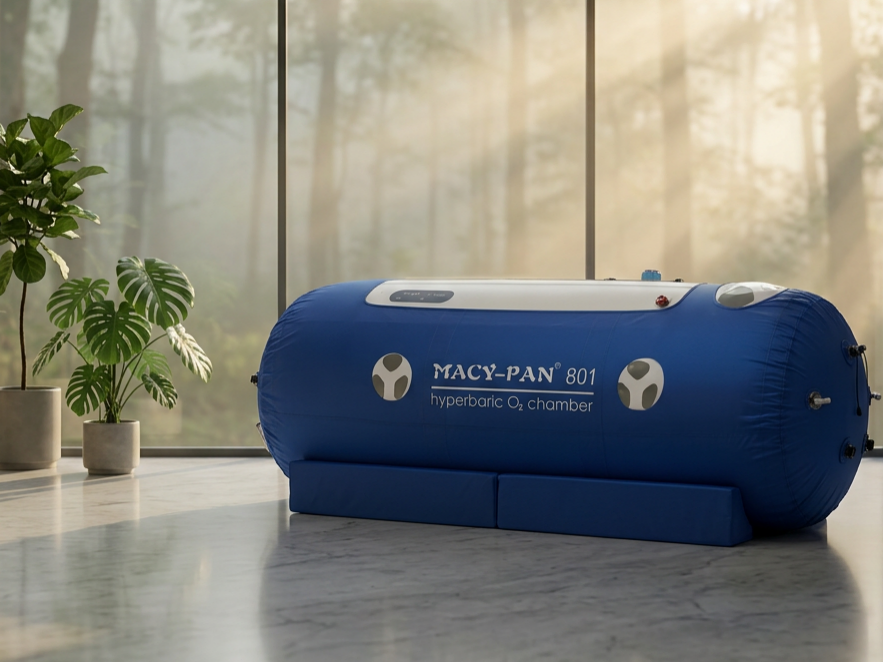
Unlike treatments that rely on injections or medications, HBOT works through a physical process.
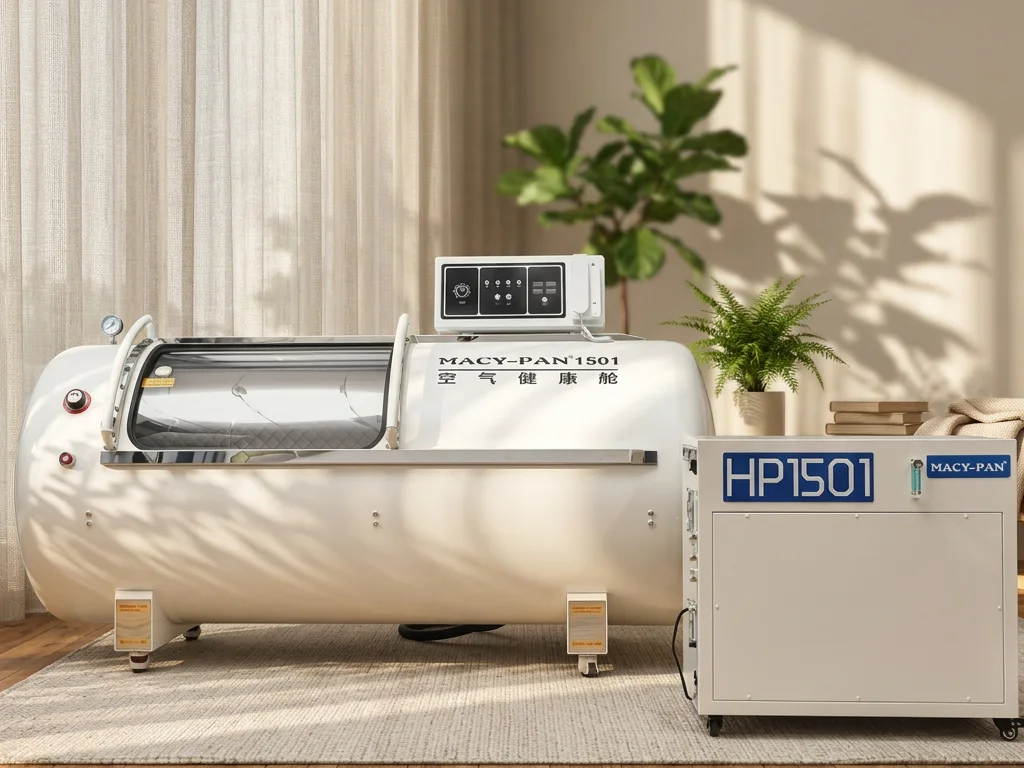
During a session, a person breathes concentrated oxygen inside a pressurized chamber. The increased pressure allows oxygen to dissolve more efficiently into plasma and other body fluids.
This process may help improve oxygen availability in tissues that have limited circulation or higher oxygen demands.
Potential areas being studied include:
- • Tissue oxygenation
- • Cellular energy production
- • Recovery after physical stress
- • Blood vessel function
- • Healthy inflammatory responses
Oxygen plays an essential role in cellular metabolism. Every cell relies on oxygen to produce energy, maintain normal function, and support repair processes. For this reason, improving oxygen delivery has become an important area of interest in recovery, performance, and healthy aging research.
HBOT is not simply about providing more oxygen.
One of the most interesting aspects of hyperbaric oxygen therapy is how the body responds to controlled changes in oxygen availability.
During a session, increased oxygen exposure creates a temporary high-oxygen environment. When the body returns to normal conditions afterward, it activates natural adaptation responses.
Researchers are studying how these responses may influence:
- • Mitochondrial function
- • Cellular stress adaptation
- • Tissue recovery
- • Blood vessel formation
- • Inflammatory balance
This process is sometimes described as a controlled physiological stimulus that encourages the body to strengthen its own recovery mechanisms.
Research into HBOT and aging continues to develop.
Studies conducted by institutions such as the Sagol Center for Hyperbaric Medicine and Research in Israel have investigated the relationship between hyperbaric oxygen exposure and aging-related biological markers.
Some studies have reported improvements in areas including:
- • Blood vessel function
- • Cognitive performance indicators
- • Skin-related measurements
- • Certain cellular aging biomarkers
Research has also explored the relationship between HBOT and markers associated with cellular aging, including telomere-related changes and senescent cell activity.
However, longevity research is a complex field, and more large-scale clinical studies are still needed to better understand the long-term effects of HBOT.
What makes HBOT particularly interesting is its combination of:
- • Non-invasive application
- • Whole-body oxygen support
- • Compatibility with long-term wellness routines
Not all anti-aging approaches work at the same level. Some focus mainly on appearance, while others explore deeper biological mechanisms related to aging.
Category: Non-invasive cellular wellness technology
HBOT is being studied for its potential effects on:
- • Oxygen delivery throughout the body
- • Cellular energy metabolism
- • Recovery and regeneration processes
- • Healthy aging pathways
Its biggest advantage is that it provides a whole-body approach without surgery, injections, or pharmaceutical intervention.
Senolytics are compounds designed to target senescent cells, which are cells that no longer function normally but remain active in tissues.
Research suggests that reducing senescent cell accumulation may influence inflammation and tissue function.
However, most senolytic applications remain under investigation, and questions regarding dosage, safety, and long-term use continue to be studied.
Regenerative medicine has become one of the most active areas in longevity research.
Cell-based approaches are being explored for their potential roles in:
- • Tissue repair
- • Immune regulation
- • Regenerative processes
However, outcomes can vary significantly depending on treatment quality, clinical protocols, and regulatory standards. Long-term evidence for anti-aging applications is still developing.
Compounds such as NMN, NR, and other NAD+ related supplements have gained popularity because of their connection with cellular energy metabolism.
Current research suggests they may influence certain biological pathways, but whether they can produce meaningful improvements in human aging remains an open question.
More long-term clinical research is needed.
Anti-aging approaches can generally be understood in three levels.
As interest in longevity continues to grow, more people are looking for solutions that balance effectiveness, safety, and long-term usability.
Many invasive approaches may involve:
- • Higher financial investment
- • Recovery periods
- • Medical supervision
- • Potential procedure-related risks
HBOT offers a different option.
Key advantages include:
- Non-invasive and comfortable experience
- No injections or surgical procedures
- Suitable for repeated sessions as part of a wellness routine
- Supports oxygen availability throughout the body
- Used by wellness centers, athletes, and individuals focused on recovery and healthy aging
For these reasons, hyperbaric oxygen chambers have become an increasingly popular technology in the fields of recovery, performance optimization, and longevity wellness.
Aging is a natural process that involves every system in the body. While changes in appearance are often the first signs people notice, the underlying process begins much deeper, involving cells, tissues, metabolism, and overall biological function.
For many years, anti-aging focused mainly on external solutions such as skincare products and cosmetic procedures. Today, the conversation is expanding toward a broader understanding of longevity, with greater attention given to cellular health, recovery capacity, and maintaining vitality over time.
Scientific research continues to explore different approaches that may support healthy aging. Among these technologies, Hyperbaric Oxygen Therapy (HBOT) has gained increasing interest because it combines advanced oxygen science with a non-invasive wellness experience.
By increasing oxygen availability under controlled pressure conditions, HBOT provides a unique approach that supports the body’s natural physiological responses. It is being studied in areas related to recovery, circulation, cellular function, and age-related health markers.
Healthy aging is not about trying to stop the natural process of getting older. It is about creating the right conditions for the body to maintain energy, resilience, and quality of life for as long as possible.
The future of anti-aging is moving beyond appearance. It is moving toward a deeper understanding of how we can support the body from within.
Post time: Aug-19-2026